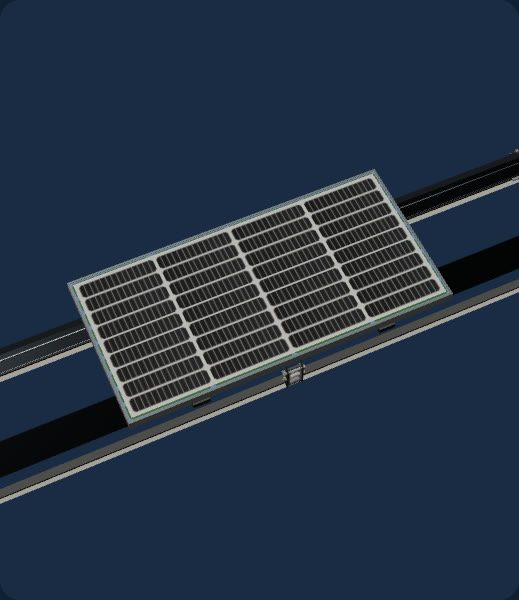
About the ASH cleaning robot project
AI Driven Solar Panels Cleaning Robot Design and Implementation: a graduation project in General Mechanical Engineering at the University of Technology, Iraq, 2026 to 2027.
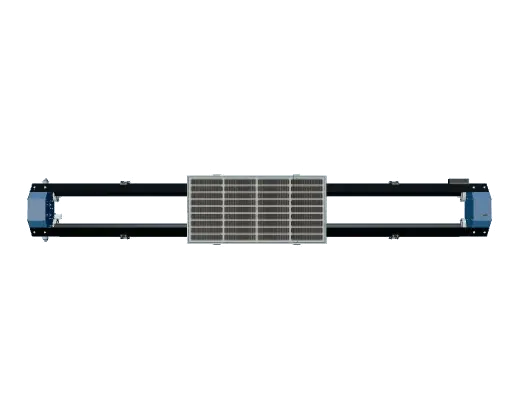
Dust takes power from solar panels.
Across the world, dirt on the glass costs panels 4 to 7% of their output on average1. On a dry, dusty roof in Basra the dirt stays until someone cleans it, and washing a row by hand means climbing onto the roof.
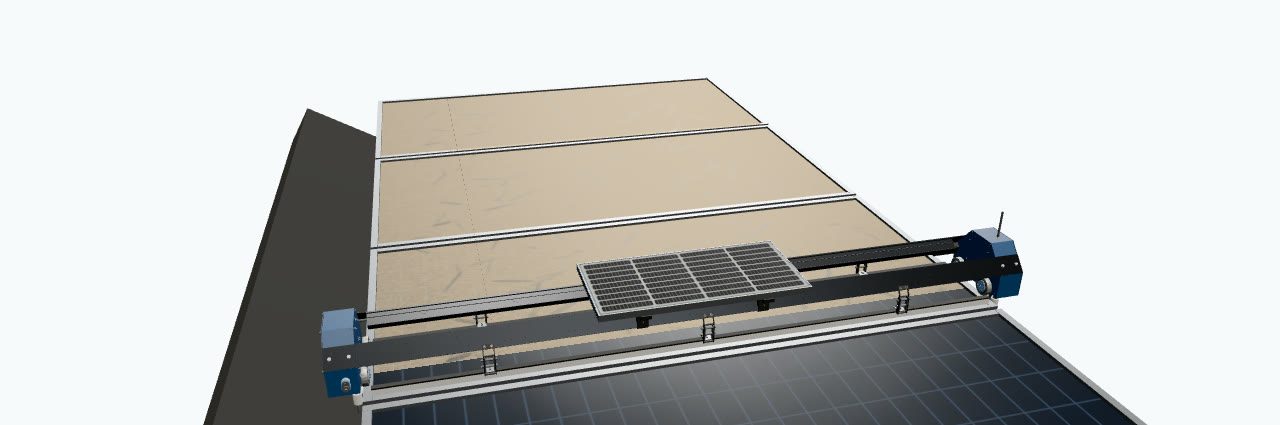
ASH does that job on its own: it drives along the row on the panel frames, sprays and brushes the glass, and parks to charge.
1. IEA PVPS, Understanding, Measuring, and Mitigating Soiling Losses in PV Power Systems, fact sheet, September 2025.
Build steps. Updated 20 November.
Design 80%
- Concept and five-panel layoutDone
- Full CAD of the robotDone
- Loads, energy and FEADone
- CNC and bending filesDone
- Nozzles and water lines in the CADNext
Electronics 100%
- Controller and Wi-Fi antennaDone
- Motors and motor driversDone
- Battery, BMS and solar chargerDone
- Camera and sensorsDone
Structure 40%
- CNC cutting of both blocksDone
- BendingDone
- WeldingNext
- PaintingNext
- AssemblyNext
Solar panels 33%
- Two LONGi X10 panels orderedDone
- Delivery on 21 NovemberNext
- Mounting on the test standNext
Phone app In development
- Screens and controlsUnder way
A percentage counts the finished steps; a step under way counts half.
Three students built ASH
Supervised by Dr. Sattar Aljabair, General Mechanical Engineering, University of Technology.
- Ahmed Safaa Shaban
- Shahad Alaa Al-Dien Salim
- Hasanien Fouad Ridha
- Dr. Sattar Aljabair
Project timeline.
- 14 NovRow changed to LONGi Hi-MO X10 panels; robot widened to match
- 15 NovFEA of the robot body and the panels
- 18 NovElectronics, printed parts and the sensor pod designed
- 19 NovBlocks sent to the CNC; two-panel test stand designed
- 20 NovElectronics bought; 50 W panel mount designed
- 21 NovX10 panels arrive